Vendors & EquipmentMurata6gSub TerahertzImt 2030
Murata builds 135 GHz antenna module aimed at future 6G radios
Murata has developed a 135 GHz antenna module for future 6G systems, placing the Japanese component maker in the early hardware race for sub-terahertz radio.
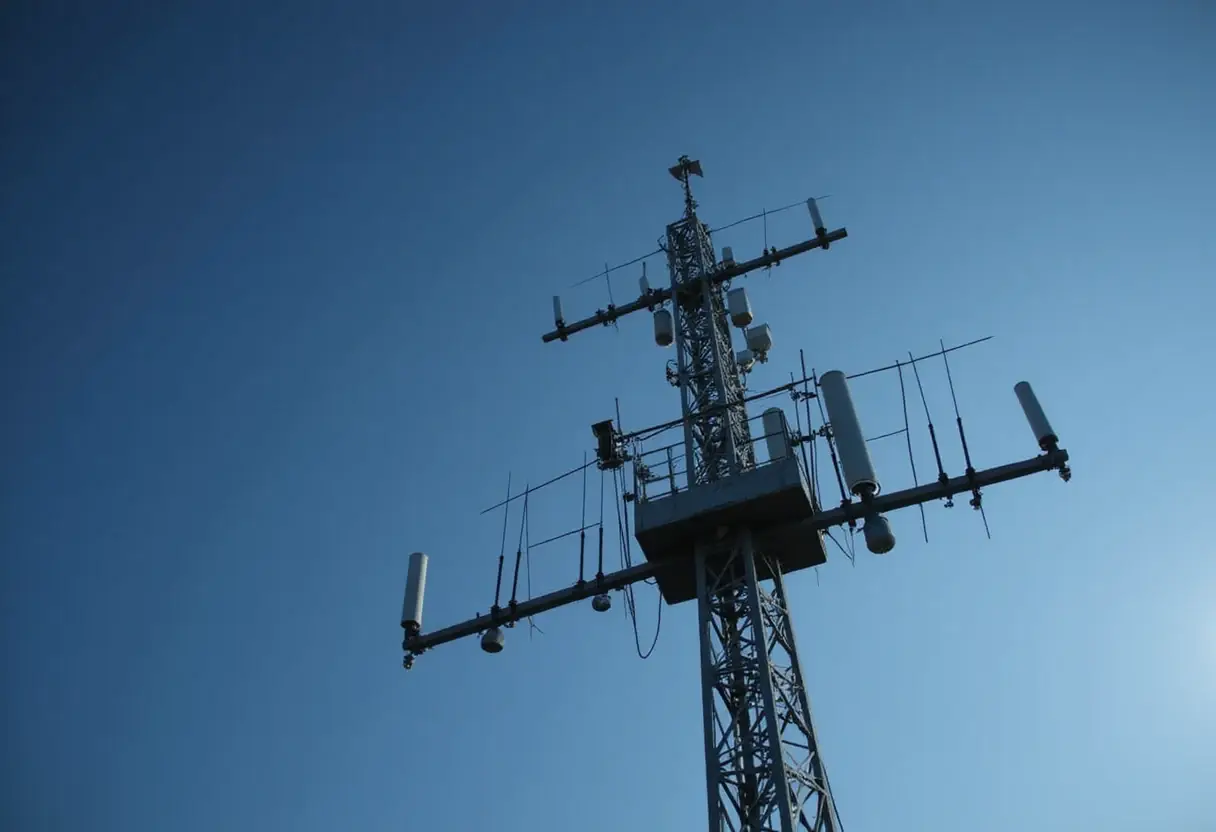 Vendors & Equipment
Why it matters
- Murata has developed an antenna module operating at 135 GHz
- The module targets sub-terahertz frequencies above 100 GHz associated with candidate 6G systems
- No commercial customers, volumes or pricing for the module have been announced
- ITU's IMT-2030 framework guides 6G standardization toward specifications around 2028-2030
- First commercial 6G deployments are anticipated around 2030
The story
Murata Manufacturing has developed an antenna module that operates at 135 GHz, a frequency in the sub-terahertz range the telecom industry associates with candidate 6G systems. The announcement puts one of Japan's largest electronic component suppliers into the early hardware race for a technology generation that has no finished standard, no allocated spectrum and no commercial launch date.
The device is an antenna module rather than a full radio or base station product. Its purpose is to give equipment makers a ready-made front end for test and prototype systems working above 100 GHz, where signal propagation, heat dissipation and packaging are hard problems that conventional 5G components were never designed to solve.
Why 135 GHz matters before 6G exists
Every mobile generation has opened new spectrum. 5G pushed into millimeter-wave bands at 24 GHz to 47 GHz; 6G research now targets the 100 GHz to 300 GHz range, often called sub-terahertz. Frequencies that high promise enormous bandwidth and, in theory, throughputs far beyond today's networks. The physics is unforgiving. Signals at 135 GHz attenuate quickly, travel short distances and demand antenna arrays small enough to fit into compact modules.
That is the engineering gap Murata is addressing. Antenna modules operating in this band are prerequisites for the channel measurements, propagation studies and over-the-air trials that standards bodies need before they can define 6G radio specifications.
What does this change for operators?
Nothing immediate. No operator can deploy the module in a commercial network because 6G does not yet exist as a defined system, and no regulator has licensed the 135 GHz band for mobile service. What changes is the supply chain timeline. Component availability at this frequency moves sub-terahertz work from laboratory instruments toward packaged, reproducible hardware, which shortens the distance between research prototypes and the pre-standard trial equipment that vendors such as Nokia, Ericsson, NTT DOCOMO and others use for 6G experimentation.
For Murata, the module is also a positioning move. The company supplies filters, capacitors, radio-frequency parts and modules to handset and network equipment makers worldwide, and it has a commercial interest in being designed into 6G hardware early, years before volume revenue arrives.
Commercial claim versus engineering reality
The development should be read as a component milestone, not a deployment fact. Murata has announced a working module at 135 GHz; it has not announced customers, production volumes, pricing or a shipping date for commercial quantities. The claim that the module serves 6G systems rests on frequency band alone, since the 6G air interface remains undefined.
This pattern is standard for the pre-standards phase of any mobile generation. In the 5G cycle, component vendors released millimeter-wave modules in 2016 and 2017, roughly two years before the first commercial 5G launches in 2019. A comparable lag for 6G would place volume demand for sub-terahertz components in the early 2030s.
The standards clock
The International Telecommunication Union is drafting requirements for 6G under its IMT-2030 framework, with completion of the vision phase targeted around 2026 and formal specifications expected toward 2028-2030. Japan, home to both Murata and NTT's early 6G research, has pushed for sub-terahertz bands to sit inside that framework, and Japanese vendors have treated frequencies above 100 GHz as a national research priority.
Murata's 135 GHz module is therefore best understood as an input to that process: hardware that lets engineers measure and trial a band the standards bodies are still deciding how to use. Commercial 6G networks, on the industry's current schedule, would follow the ITU timeline with first deployments anticipated around 2030.
Also reported
Source: Google News: 6G network
More from James Calloway
Show full bio
Staff writer covering companies, deals and strategy in Carrier business, 5G and 6G, fiber and broadband at Telecom Gazette.
326 articles