5G & 6G6gVerizonEricsson7ghz Spectrum
Verizon and Ericsson Claim First Outdoor 6G Call in 7GHz Band
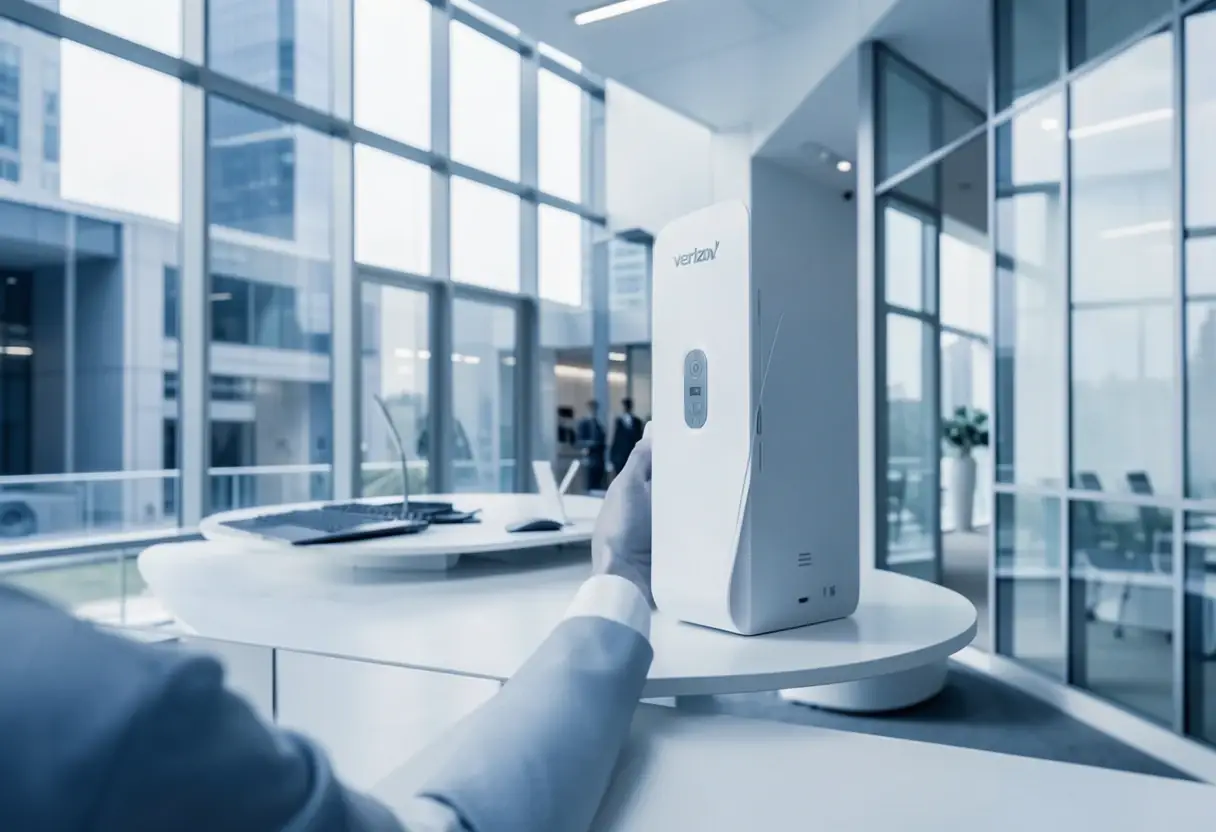
Verizon and Ericsson made what they call the first field 6G call on 7GHz spectrum in Concord, California, using a 400MHz carrier and a portable test house to measure outdoor-to-indoor penetration.
 5G & 6G
Why it matters
- Verizon and Ericsson completed what they call the first field 6G call on 7GHz spectrum in Concord, California, using a 400MHz carrier.
- Tests covered distances of roughly 100–200 meters with outdoor and indoor configurations in a portable 12x8-foot test house.
- NTIA faces a 12-month deadline, set in December, to complete its lower 7GHz (7125–7400MHz) study before any FCC auction design.
- T-Mobile holds a temporary FCC license to test 6G prototypes from Ericsson and MediaTek in 6425–6825MHz.
- 6G specifications are expected to be finalized within the next two years.
The story
Verizon and Ericsson say they have completed the first 6G call in the field on 7GHz spectrum, using proof-of-concept equipment at a commercial network site in Concord, California.
The call ran on a pre-standard 6G stack over a 400MHz carrier, transmitted from Ericsson's PoC 6G basestation installed at Verizon's site shelter. The test was not a lab exercise: the operators evaluated performance outdoors and through building walls, at distances of roughly 100 meters to 200 meters between the basestation and the device.
What the companies did not disclose is equally telling. There were no throughput figures, no latency results and no coverage radius claims in the announcement — only a description of what the test setup could measure.
What did the test actually involve?
The user equipment sat inside a purpose-built structure: a 12-foot-by-8-foot house on wheels, fitted with various wall and window materials. That design let engineers assess outdoor-to-indoor penetration losses across different glass and building materials, with the device receiving signals both inside and outside the house.
"The confirmed field result is an outdoor call, while the broader proof-of-concept examines how 6G performance carries from open air into indoor spaces," the companies said in a statement.
They added that the testing "characterizes coverage, throughput, latency, stability and feature behavior under realistic conditions, including line-of-sight and non-line-of-sight paths, foliage, obstacles and outside-in penetration through different glass and building materials."
The distinction matters. An outdoor call at 100–200 meters over a 400MHz carrier demonstrates the radio link works outside the lab — a meaningful but early step. Whether 7GHz spectrum can deliver usable indoor service at commercial cell radii remains the open question the portable house was built to probe.
Where does the spectrum stand?
The companies did not specify which part of the 7GHz band they used. That omission is not incidental: the band is not yet allocated for commercial use.
The NTIA is studying the lower 7GHz band (7125MHz–7400MHz), one of four bands identified for commercial 6G in the US. In December, the administration gave NTIA a 12-month deadline to finish that study and produce plans for relocating current federal users. Only then can the FCC begin designing an auction for the frequencies.
Work on 7GHz and 1.6GHz (1675MHz–1695MHz) is furthest along, according to NTIA's milestone tracker. The other two candidate bands — 2.7GHz (2700MHz–2900MHz) and 4.4GHz (4400MHz–4940MHz) — are at earlier stages.
In other words, Verizon and Ericsson are testing spectrum that no US operator can yet buy.
Who else is in the race?
Verizon's 6G Innovation Forum now counts 14 members. Ericsson is one of five founding members alongside Meta, Nokia, Qualcomm and Samsung. Last month the project added nine more: Amazon Web Services, Cisco, Intel, Keysight Technologies, MediaTek, NVIDIA, Palo Alto Networks, Rohde & Schwarz and Viavi Solutions.
Rival activity is accelerating too. Verizon recently applied for an FCC experimental license to use 4GHz spectrum to demonstrate 5G Advanced sensing technology as a precursor to 6G. T-Mobile, meanwhile, has received a temporary license to test prototype 6G equipment from Ericsson and MediaTek in the 6425MHz–6825MHz range.
"This outdoor 6G milestone demonstrates how close industry collaboration helps us generate the key technical insights needed to shape global standards and understand how future 6G networks could be designed, deployed and experienced," said Yago Tenorio, Verizon's chief technology officer and SVP of technology development.
Note what the quote does not claim: no deployment date, no performance target, no commercial commitment — only that the work informs standards and design.
What comes next?
6G specifications are expected to be finalized within the next two years, and Verizon and Ericsson say they will continue analyzing field results and applying the learnings to further 6G research and planning. The pace of the NTIA's 7GHz study, due within 12 months of December's directive, will determine whether spectrum is ready when the standards are.
Also reported
Source: Light Reading
More from Rebecca Stone
Show full bio
Correspondent covering technology and product news in Carrier business, 5G and 6G, fiber and broadband at Telecom Gazette.
327 articles